

Bought cabinet showroom leads still run about $15–$100 each and often go to 3–5 competitors — the compounding path is owned demand that books showroom appointments you keep. Shared Angi- and HomeAdvisor-class CSVs look busy on a dashboard and thin on the floor. The commercial unit is a named buyer with a confirmed time who sits with a designer on the floor or in the store — not a rented form-fill sold to several rivals the same afternoon.
You sell the floor visit. The homeowner is the audience. That one sentence keeps “cabinet showroom leads” out of lead-mill cheerleading and inside owned discovery that books sits. Industry fit starts with marketing for kitchen & bath showrooms; retail multi-brand stores border on marketing for cabinet dealers for the same booked in-store sit. Sibling color lives once on how to market my kitchen showroom business. Channel execution after fit routes to SEO for cabinet businesses and Google Ads for cabinet businesses. The National Kitchen & Bath Association frames kitchen and bath as a design-led trade with long research cycles; a lead pack that ignores that cycle usually burns designer time. Named owned-channel proof stays on allow-list cases such as Bienal Custom Closets’ $234 → $47 CPL, NextDAY Cabinets for #1 rankings only, and GBC Kitchen and Bath or Cabinet Era named without new ROI wrappers.
Should you buy cabinet showroom leads?
Buy shared cabinet showroom leads only as a capped short-term bridge — never as the foundation — because Angi- and HomeAdvisor-class inquiries still price about $15–$100, routinely sell to 3–5 competitors, and charge you whether or not anyone ever sits on the floor.
The platform owns the relationship. Stop paying and the CSV pipeline dies the same day; nothing compounds. HomeAdvisor’s membership fee and lead-marketing practices drew regulator attention in a Federal Trade Commission order that required the company to pay up to $7.2 million over deceptive claims about lead quality and source. When the regulator fines the market leader for how it sells leads, treat shared packs as rented leftovers — not a showroom growth system. Score cost per kept showroom appointment, not cost per name.
Which lead channel gives you the most control?
Four channels produce nearly all cabinet showroom appointments, and they differ most on exclusivity and ownership — the two things bought shared leads can never offer.
| Channel | Typical economics | Who owns the buyer? | What to score |
|---|---|---|---|
| Shared marketplaces (Angi / HomeAdvisor-class) | $15–$100 per lead + membership tax | Platform; sold to 3–5 rivals | Rarely worth foundation spend |
| Google Local Services Ads | Pay-per-lead; no annual membership tax | You (least-bad bridge) | Kept appointments, not raw leads |
| Google Business Profile + local SEO | $0 per GBP action at maturity | You; exclusive | Calls, directions, booking clicks that sit |
| Referrals + owned content | Partner time + publishing | You; pre-sold | Booked floor sits and close rate |
Read the ownership row twice. Shared leads reset to zero when the invoice stops; owned GBP, reviews, content, and referrals compound after the work is done. Bienal Custom Closets is the named owned-channel CPL contrast: $234 → $47 after restructuring away from bought demand.
How do you turn Google Business Profile into your best salesperson?
For a showroom that sells through physical visits, a complete Google Business Profile is the highest-leverage free asset in this playbook — Google research found customers are 2.7× more likely to consider a business reputable when its profile is complete, and 70% more likely to visit.
Complete is the operative word. Most cabinet showrooms stop at name, address, and phone. Work every field instead: primary category set to Cabinet store or the closest fit; 20+ real photos of vignettes, installs, team, and parking; an appointment link that is live and tested; service-area cities listed honestly; Q&A seeded with questions you hear on the floor; a weekly post cadence; and a weekly performance-tab check for calls, direction requests, and booking clicks. Treat those GBP actions like showroom appointments in waiting — same follow-up discipline as a form fill. Route deeper organic build to SEO for cabinet businesses after the profile is honest.
Why do reviews decide who gets the showroom appointment?
When a homeowner is choosing between three showrooms in the map pack, reviews often decide the click — BrightLocal’s Local Consumer Review Survey found that 41% of consumers always read reviews when browsing for local businesses, up from 29% the year before.
Two rules make review programs work in cabinetry. Ask at the emotional peak — final walkthrough day — with a QR code or direct link that removes every step. Favor cadence over bursts: a steady two-to-four reviews a month for a year beats forty in one week, keeps fresh dates visible, and looks earned. Respond to every review, including the rough ones; prospects read responses as a preview of working with you. Reviews do not replace a booked sit, but they are often the tiebreaker that gets the appointment on the calendar.
What content do cabinet showroom buyers actually search for?
Showroom visits start as searches — Google research found that 76% of people who search for something nearby on a smartphone visit a business within a day, and 28% of those searches end in a purchase — so the showroom that owns useful local and appointment-intent pages owns more floor traffic.
Two content layers matter. The first is local: a genuinely useful page for each real showroom location — inventory lines, brands, service area, directions, parking, appointment link — without thin city×service clones. The second is commercial question content buyers actually use before they sit: lead cost, owned vs rented demand, how appointments get booked, and what to expect on the floor. Answer in the first paragraph, then invite the sit. Skip fashion-hardware rabbit holes that do not book appointments. Near-term paid support after the organic foundation belongs on Google Ads for cabinet businesses — still scored as kept floor appointments.
How do you build a referral network that sends pre-sold customers?
Referred customers are not just easier to close — a landmark Journal of Marketing study found referred customers delivered about 16% higher customer lifetime value and 18% lower churn than comparable non-referred customers, which is why a designer walking a client through your door is the warmest showroom appointment that exists.
Do not leave referrals informal. Build a named list: interior designers, general contractors, custom builders, realtors, and complementary trades such as countertop and flooring shops. Offer a genuine two-way arrangement plus a defined thank-you per closed project, and give each partner a trackable code or dedicated contact so you can measure who actually sends sits. Maintain it monthly with new-display previews, first access to promotions, and a quarterly partner hour on the floor. Measure partner-sourced booked showroom appointments, not handshake volume.
What should your first 90 days look like?
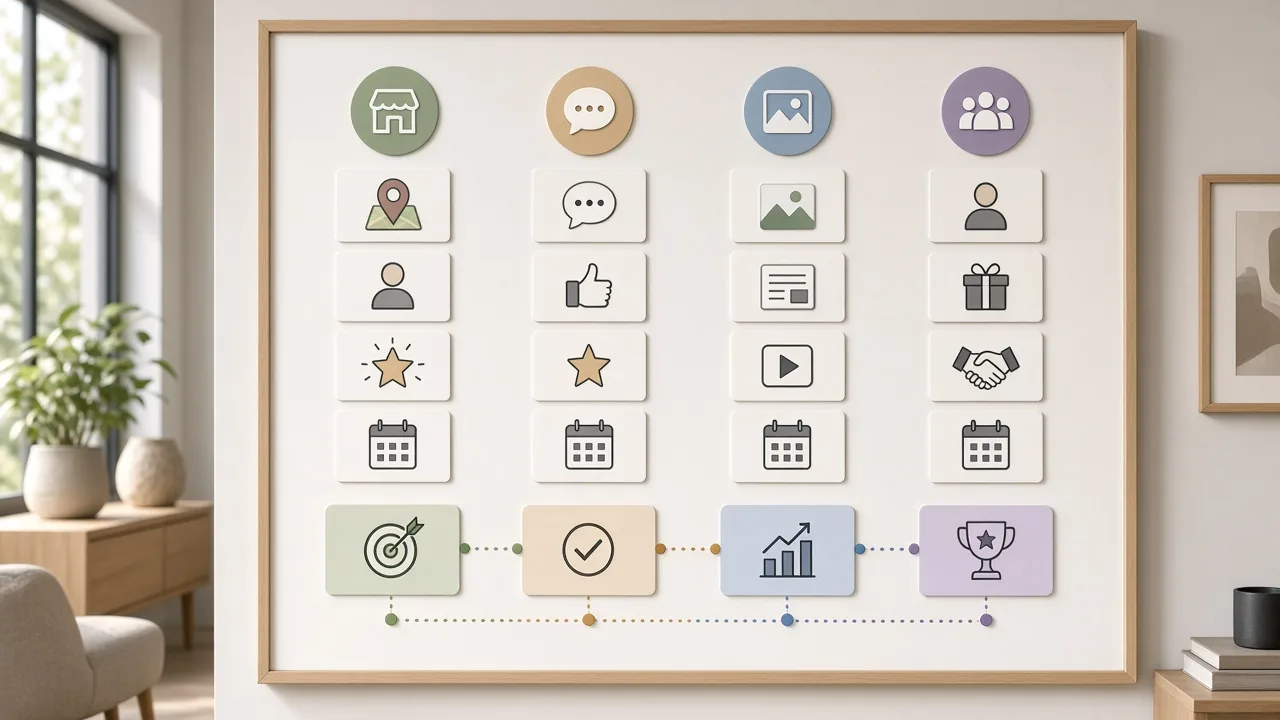
Run owned channels in sequence over about 90 days — GBP, then reviews, then content, then referrals — and reallocate by kept showroom appointments, not by CSV length or vanity impressions.
- Weeks 1–2 — GBP overhaul. Complete every field, ship 20+ photos, make the booking link live, seed Q&A, and run a review sprint to your last 15–20 happy customers.
- Weeks 3–6 — Content foundation. Publish the real location page plus four appointment-intent answers (owned vs bought demand, what a floor visit includes, pricing context, how to book). Bake the review ask into every install handoff.
- Weeks 7–10 — Referral outreach. Contact ten designers, GCs, and builders; propose two-way terms; set tracking per partner.
- Weeks 11–13 — Measure and reallocate. Compare appointments per channel: GBP calls and direction requests that sat, review velocity, page-level form fills that became sits, partner referrals. Cut what did not book; double what did.
How do you fill the calendar without buying another lead pack?
When you’re ready to hire, marketing for kitchen & bath showrooms books 20 showroom appointments in 90 days or you don’t pay — and retail multi-brand stores take the same commercial noun on marketing for cabinet dealers after the border check.
Vague retainers sell hours and dashboards. A commercial hire names the conversion noun — booked showroom appointments — then runs owned channels so exclusivity compounds. Route channel execution to the live SEO and Google Ads service pages after industry fit is clear. Bienal Custom Closets remains the named owned-channel CPL proof ($234 → $47); NextDAY Cabinets stays #1 rankings color only. Founder Sezgin Arslan has 7+ years in cabinet-industry marketing. Confirm appointment reporting and market exclusivity on the call — those checks matter more than another shared CSV.