
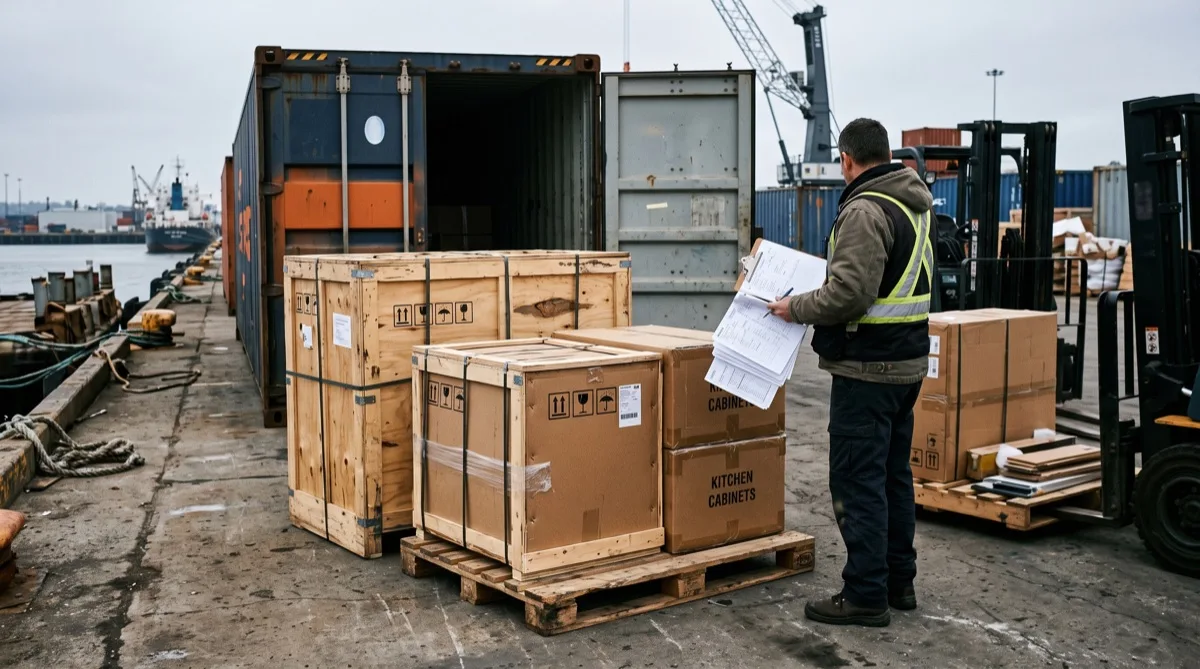
This is a living tracker for the Section 232 tariffs affecting imported kitchen cabinets, bathroom vanities, and related wood furniture. Rates and dates change through proclamation and negotiation, so the numbers below are verified against primary government and trade sources as of July 6, 2026.
If you import cabinets or source from importers, the next move is confirming your landed-cost model. CabinetBoost works with cabinet shops and showrooms on demand planning and local SEO; book a call if you want help translating tariff volatility into pricing and inventory strategy.
Related: Meet CabinetBoost at KBIS 2026.
For a roundup of useful tools, see Best Cabinet Design Software (2026).
What is the current Section 232 tariff on kitchen cabinets and vanities?
The United States is imposing a 25% ad valorem Section 232 tariff on imports of kitchen cabinets, bathroom vanities, and related completed wooden furniture. The duty took effect on October 14, 2025 under Presidential Proclamation 10976, which invoked Section 232 of the Trade Expansion Act of 1962 following a Commerce Department finding that imports of timber, lumber, and derivative products threatened U.S. national security.
The original proclamation scheduled an increase to 50% on January 1, 2026. On December 31, 2025, President Trump issued an amending proclamation that delayed the increase for one year, citing ongoing productive negotiations with trading partners. The Hong Kong Trade and Industry Department circular confirms the current 25% rate remains in effect through 2026 and the higher rate now applies from January 1, 2027.
Which cabinet and wood products are covered?
The Section 232 action covers three main product groups, as summarized by Green Worldwide and Unicargo:
| Product group | HTSUS heading | Current Section 232 rate | Scheduled change |
|---|---|---|---|
| Softwood timber and lumber | 4403-4407 | 10% | No scheduled change |
| Upholstered wooden furniture | 9401 | 25% | Rises to 30% on Jan 1, 2027 |
| Completed kitchen cabinets, vanities, and parts | 9403 | 25% | Rises to 50% on Jan 1, 2027 |
Important nuance: cabinet hardware, hinges, slides, and fasteners are not covered by this Section 232 action. They may be subject to normal MFN duties, Section 301 China tariffs, or other trade remedies, but the wood-products Section 232 proclamation targets the cabinet, vanity, and upholstered-furniture classifications above. If your bill of materials includes hardware from China, Vietnam, or elsewhere, run those HTS codes separately.
Plywood under HTS Chapter 4412 is also generally excluded from the Section 232 scope, according to trade press summaries. That matters for cabinet shops sourcing hardwood plywood panels.
How do the country caps and exceptions work?
Section 232 tariffs are technically country-of-origin neutral, meaning they apply regardless of whether the goods come from China, Vietnam, Canada, Mexico, or the EU. However, the original proclamation and subsequent agreements set maximum combined-duty caps for certain partners:
| Trading partner | Combined tariff cap (MFN + Section 232) | Source |
|---|---|---|
| United Kingdom | 10% | Unicargo |
| European Union & Japan | 15% | Unicargo |
| Most other countries | Full Section 232 rate applies | Unicargo |
This means a cabinet imported from the UK faces a maximum combined duty of 10%, while the same cabinet from a non-exempt country faces the full additional 25% Section 232 duty on top of the normal MFN rate. Sorse Furniture notes this weakness in the “move production to Vietnam” strategy: for covered Section 232 products, Vietnam-origin goods still face the same 25% baseline rate.
When does the rate change next?
The next scheduled event is January 1, 2027, when the cabinet/vanity rate is set to rise from 25% to 50% and upholstered furniture from 25% to 30%, absent a new agreement or proclamation.
A second date to watch is October 1, 2026. The Commerce Department is required to report on whether the Section 232 action should expand to additional wood-product categories, potentially including hardwoods under HTS 4401-4411. That report is referenced in the CRS report R48781 and trade summaries. If the scope expands, the product list in the table above could grow.
Does Section 232 stack with other duties?
Yes. Section 232 duties are additional duties on top of normal MFN rates and can stack with antidumping, countervailing, and Section 301 remedies. Unicargo and Fordaq both flag that importers of upholstered furniture and cabinetry from China, Vietnam, Malaysia, or Cambodia could face combined duties of 50% or more in the second half of 2026, with further escalation possible in 2027.
For Chinese-origin cabinets specifically, existing antidumping and countervailing duties can push combined rates above 70% when layered with the Section 232 tariff. That is why classification and country-of-origin documentation now have real money attached.
What should cabinet dealers, showrooms, and shops do with this information?
- Verify the HTS code on every import invoice. Make sure your broker is classifying cabinets and vanities under the codes covered by the proclamation.
- Model landed cost at both 25% and 50%. Even if January 2027 feels far away, purchase commitments and customer quotes written today can cross that date.
- Add a materials-escalation clause to long-lead quotes. This is standard practice for lumber and panel goods and should be extended to imported cabinet lines.
- Communicate timing to customers. If a job depends on imported cabinets arriving after December 2026, the 50% rate is a real risk.
- Diversify sourcing where possible. Domestic or USMCA-qualifying suppliers may not eliminate duties entirely but can reduce exposure.
This tracker is NOT for retailers selling only domestically produced cabinets with no import exposure. If your entire line is U.S.-made, Section 232 is a competitive backdrop, not a direct cost.
How do I verify the rate myself?
Primary sources to bookmark:
- U.S. Harmonized Tariff Schedule – search the specific 8- or 10-digit HTS code on your invoice.
- U.S. Customs and Border Protection CSMS messages – implementation guidance for Section 232 entries.
- Congressional Research Service R48781 – background on the Section 232 timber/lumber investigation and product-scope debates.
For cabinet shops and showrooms, the strategic play is not predicting tariff politics; it is building pricing flexibility and a local demand channel that does not depend on squeezing import margins. Our SEO & AI Search service helps cabinet dealers and shops own local search so tariff shocks do not have to be passed straight through to quotes.
Sources
- Hong Kong Trade and Industry Department: U.S. Amendments to Additional Tariffs on Timber, Lumber and Derivative Products
- Hong Kong TID: U.S. Section 232 Tariff Measures Summary
- Green Worldwide: Section 232 Wood Products Tariffs Remain Unchanged Through 2026
- Unicargo: How to Import Furniture to the USA (2026)
- Sorse Furniture: U.S. Tariffs on Chinese Furniture in 2026
- Fordaq: U.S. International Commerce Court Strikes Down Section 122 Global Tariffs
- CRS R48781: Section 232 Investigations and Actions
Related: For Cabinet Shops · For Showrooms · SEO & AI Search · Book a Call · Maximize Cabinetry Sales with Google Ads Campaigns