
Marketing for cabinet dealers and stores.
Named proof from a cabinet dealer
- GBC Kitchen and Bath — a live cabinet-industry case. The numbers stay on that page.
- NextDAY Cabinets — #1 rankings only. The full story stays on that page.
- Bienal Custom Closets — a live adjacent-trade case, not primary for dealers. The numbers stay on that page.
From local search to a store conversation
How a nearby homeowner moves from a search to a sit with your showroom staff.
- Local search
A homeowner searches for cabinet lines, price points and a store they can visit nearby.
Who acts CabinetBoost - Compare
They find your display floor, door samples and line card, then check hours and reviews.
Who acts CabinetBoost - Inquire
A call or form fill is answered fast and routed into a confirmed store visit.
Who acts Both - Sit down
Your team hosts the appointment and compares lines in person with a ready buyer.
Who acts Your team
CabinetBoost confirms and reminds appointments; your store owns the conversation on the floor.
The Cabinet Store Playbook — what we do for dealers and stores like yours 6 steps
Homeowners searching cabinets and kitchen design inside your delivery radius see you first, then land on a store page built around the lines you carry — not a homepage that dumps the click.
Hours, photos of display kitchens and door samples, products, questions, and review velocity so the store appears in the map pack for nearby cabinet searches.
Post-delivery asks and proof from finished kitchens help the next homeowner choose your multi-brand floor over the big-box aisle. No review-gating.
Display kitchens, door samples, and finished installs become the creative. A stock island from a template library does not sell a sit on your retail floor.
A form fill that sits overnight is a sit you already paid for and then gave to the store that texted back. Keep the sequence alive so the in-store design conversation actually books.
Retail reporting tracks multi-brand sits on the display floor — which line tier the homeowner compared, whether they arrived, and what each booked conversation cost — not clicks and impressions.
Cabinet dealers and stores need homeowners comparing lines on the retail floor
CabinetBoost builds retail cabinet stores one demand system scored on qualified, confirmed in-store conversations rather than clicks, and runs one store per market so two dealers never bid the same ZIPs. See the cabinet marketing services behind it.
More about this program
This page is the marketing program for retail cabinet dealers and stores — a storefront with display kitchens, showroom staff, a line card of stock, semi-custom, and special-order brands, and a delivery radius. The product is a cabinet line carried plus in-store design plus delivery. CabinetBoost takes one cabinet store per market so two retailers are not bidding on the same ZIPs.
The counted outcome is a booked showroom appointment: a named local homeowner who owns the space, with project scope, a timeline, and a budget in the range your lines serve, and a confirmed time. A confirmed time counts whether or not the homeowner attends; attendance is tracked separately. Not a click. Not a form fill. Not an Angi lead.
NKBA Member · KBIS 2026 Exhibitor · 7+ years in cabinet-industry marketing (CabinetBoost, 2026). The offer is the 20/90 Guarantee: 20 showroom appointments in 90 days or you don't pay. By Sezgin Arslan, Founder · Updated Sep 14, 2026.
Picture the store floor full of homeowners comparing lines.
Not brochure browsers. Not RTA screenshots with no timeline. Local homeowners ready to sit with your showroom staff and compare cabinet lines at several price points.
- 20 in 90 days A store calendar that stays full Named homeowners with a confirmed time, qualified on scope, timeline, and budget before they book. The Saturday floor stops waiting on quiet walk-ins.
- Ready to compare Showroom staff selling lines, not defending RTA You sit with people who already accept what stock, semi-custom, and special-order work costs. The brochure browser never reaches the booked conversation.
- Or you don't pay The risk sits with us 20 booked showroom appointments in 90 days, or you don't pay our fee. You risk nothing but the strategy call.
Sound familiar? 3
The big-box kitchen department owns the ZIP. A homeowner two miles away searches for kitchen cabinets, sees Home Depot, Lowe's, and IKEA first, and the store with a floor full of display kitchens stays quiet that Saturday.
Traffic arrives curious. They open drawers, take a flyer, and say they are just starting to look, so the showroom staff's day fills with browsing instead of booked design conversations.
Homeowners arrive with an online ready-to-assemble number in their phone. The conversation opens on price before finish, box construction, lead time, delivery, and the showroom staff's plan get a hearing.
What most cabinet dealers and stores invest
Most cabinet businesses start between $2,500 and $5,000 per month (CabinetBoost, 2026). That is the CabinetBoost program fee. Ad spend is separate and stays in your accounts. Multi-location stores run higher. The first 90 days is a sprint; after that the engagement is month-to-month. The sanity check is one delivered kitchen at your average ticket. If that kitchen is worth more than a month of program fee, the math is the owner's, not a frozen multiple. CabinetBoost will not invent an unattached ROI multiple on this page. The number we stand behind is 20 showroom appointments in 90 days or you don't pay.
How cabinet-store marketing differs from showroom marketing
If your growth is a kitchen and bath design floor rather than a multi-brand retail store, start here: marketing for kitchen & bath showrooms.
Warehouse, branch, reorders, and qualified dealer meetings live on marketing for cabinet wholesalers and distributors.
Plant, line, spec work, builders, OEM, and qualified dealer meetings live on marketing for cabinet manufacturers.
Custom shop and local craft live on marketing for cabinet makers. In-home remodel consultations live on marketing for kitchen & bath remodelers. Closet consults live on marketing for custom closet companies. Measures and templates live on marketing for countertop stores and fabricators.
Weekly reporting lands Friday: multi-brand sits booked on the retail display floor, which line tiers homeowners compared, attendance, and what each booked conversation cost. That console lives on analytics. Campaigns go live after a fast kickoff. Many cabinet clients see the first booked in-store conversation inside 14 days. The contract is 20 showroom appointments in 90 days, not a one-week spike.
Who fits this program
The guarantee only works when the fit is right — so we’re direct about who it’s not for.
If there is no retail display floor where a homeowner can compare lines in person, this program is the wrong fit. The playbook books showroom appointments on a multi-brand store floor.
We put named homeowners on the calendar. If nobody on the floor can take scope, timeline, and budget and price the kitchen from the lines you carry, more appointments will not fix a closing problem.
If you want leads to chase, look elsewhere. CabinetBoost books showroom appointments: named homeowner, confirmed time; attendance isn't required. We do not gate photos or the strategy session on a public review.
Cabinet store terms we use on this page 11
- Walk-in
- A local homeowner who comes through the door to look at cabinets, ready to be booked with your showroom staff.
- In-store design and estimate conversation
- The seated appointment where your showroom staff takes scope, timeline, and budget and prices the kitchen from the lines you carry.
- Lines carried
- The stock, semi-custom, and special-order cabinet brands your store sells and can deliver.
- RTA price comparison
- The flat-packed ready-to-assemble pricing homeowners find online; store copy wins by showing assembly, finish, box construction, lead time, and delivery.
- Delivery radius
- The ZIP codes and drive times your store serves, which is also the shape of the ad and local-search footprint.
- Map pack
- The local results block where a strong Google Business Profile and steady reviews put your store in front of nearby searches.
- Showroom staff
- The people on the retail floor who run the booked conversation — not a warehouse counter and not a plant rep.
- Display kitchen
- A staged kitchen on the store floor where a homeowner can open drawers, compare door samples, and see how lines sit at different price points.
- Door sample
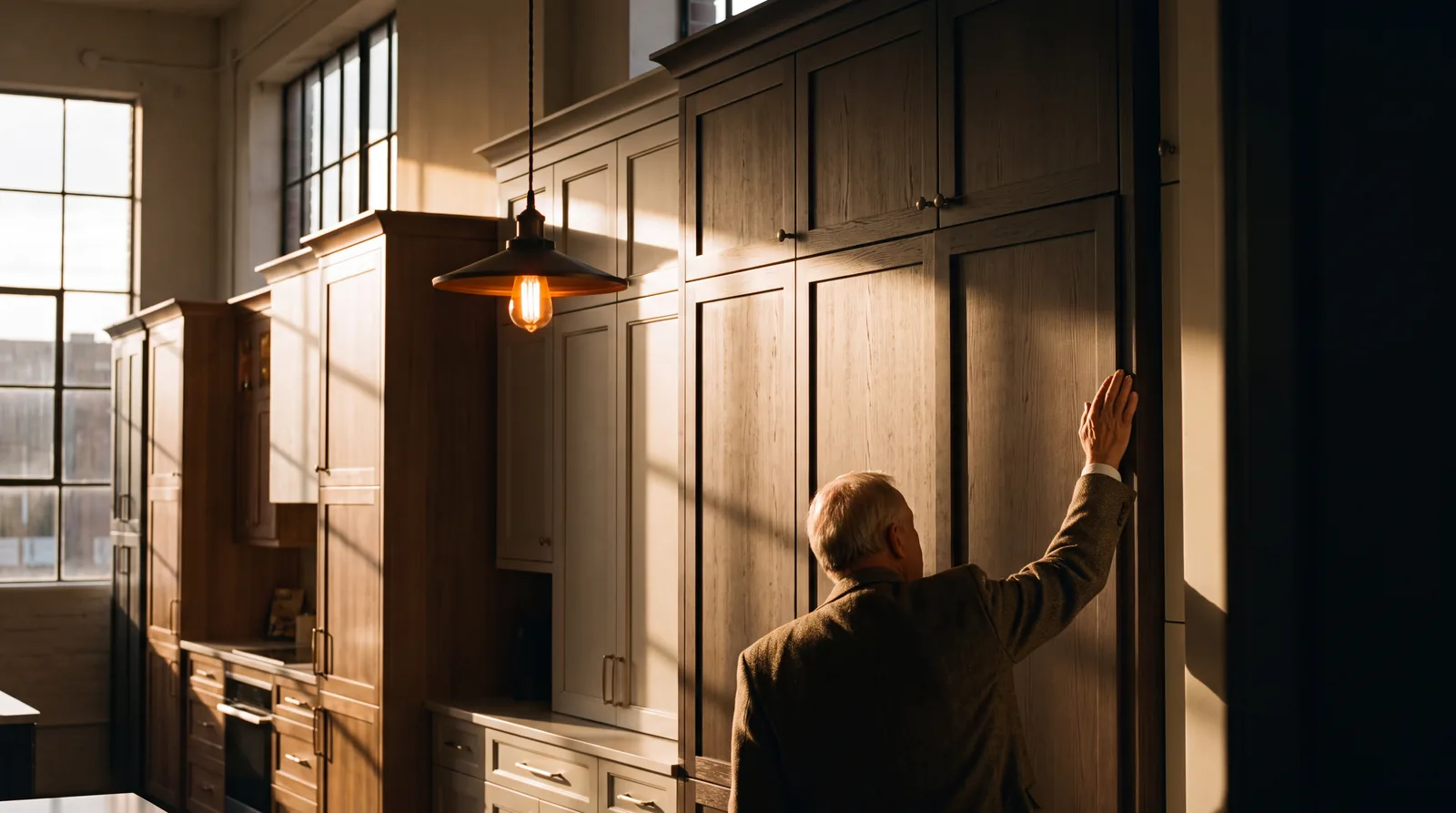
- The physical door, finish, and profile a homeowner holds during the sit. Creative that sells the visit should look like this wall.
- Showroom appointments
- The counted outcome in the guarantee: 20 showroom appointments in 90 days or you don't pay. Named homeowner, confirmed time counts; attendance is tracked separately.
- No-show
- A booked appointment the buyer does not attend. It still counts toward the guarantee because the time was confirmed; attendance is tracked separately.
The Guarantee
Questions owners ask before they call.
How much should a cabinet dealer or store spend on marketing per month?
Most cabinet businesses start the CabinetBoost program between $2,500 and $5,000 per month. That covers the program fee, while ad spend stays separate and in your accounts. Multi-location stores run higher. The first 90 days form the initial sprint, followed by month-to-month work. One delivered kitchen at your average ticket is the sanity check.
Walk-ins are down and the big-box kitchen department ranks first. Can marketing bring local homeowners back through the door?
Yes. CabinetBoost runs Google Ads on local cabinet and kitchen-design searches, strengthens your Google Business Profile and local search presence, and builds review velocity so nearby homeowners see your store in the map pack. Fast follow-up then turns those calls and form fills into booked in-store design conversations.
Should a cabinet store invest in local search or Google Ads first?
Google Ads usually opens the fastest lane, because homeowners searching inside your delivery radius can reach the store within days of launch. Local search and Google Business Profile work compounds alongside it, and review velocity lifts both. CabinetBoost sequences all three so the store earns steady visibility and more homeowners book showroom appointments to compare lines and price points.
How does cabinet-store marketing differ from kitchen and bath showroom marketing?
A cabinet dealer or store sells the lines it carries across several price points, so a homeowner books a showroom appointment to compare those options in person. The retail-store playbook stays distinct from K&B design floors.
What counts as a qualified in-store design and estimate conversation?
A named homeowner who owns the space, has a kitchen project with real scope, a timeline, and a budget in the range your lines serve, verified contact details, and a confirmed time. A confirmed time counts toward the 20; attendance is tracked separately. CabinetBoost confirms and reminds every appointment so showroom staff hours go to buyers who arrive.
Do you work with competing cabinet dealers in my area?
CabinetBoost works with one cabinet store per market. During onboarding we confirm your ZIP codes and delivery radius, and we tell you plainly whether your area is open. That exclusivity keeps budget, keyword coverage, and review strategy pointed at your own market while the big-box departments compete for the same searches.
How do you define our territory and delivery radius?
CabinetBoost maps the ZIP codes your store delivers to, the drive time homeowners accept, and the lines you carry, then aims campaigns, store pages, and Google Business Profile work at that footprint. We review the radius during onboarding and again as delivery capacity, staffing, or a second location changes.
Does this work for stores selling stock and semi-custom cabinet lines?
Yes. Stock, semi-custom, and special-order programs all fit, and each gets its own keyword coverage, quoting language, and creative. CabinetBoost highlights finish options, door styles, box construction, lead times, and delivery so homeowners comparing online ready-to-assemble pricing see the value your lines and your showroom staff deliver.
How soon do booked in-store conversations start, and how do we track progress through the first 90 days?
Campaigns go live after a fast kickoff, and many cabinet clients see the first booked in-store conversation inside 14 days. CabinetBoost reports weekly on calls, form fills, booked conversations, attendance, and cost per booked conversation, so your team sees exactly what each channel contributes while the first 90 days run.
What results can a cabinet dealer point to?
Measure return through booked in-store design conversations, attendance, quoted kitchens, average ticket, and delivered jobs per month. Named proof comes from Cabinet Era, the multi-location cabinet dealer that grew from 3 to 6 locations with CabinetBoost, alongside NextDAY Cabinets' #1 rankings and GBC Kitchen and Bath's nine-plus months of consistent lead flow.
20 showroom appointments in 90 days, or you don't pay
Start with the free audit: we check how nearby homeowners find your store, then map the path to booked showroom appointments.