

Becoming a cabinet dealer means securing retail lines, a display floor, and local buyers — not filling out a wholesale warehouse application and calling it a store. The commercial question is operator-to-operator: how do you stand up a retail cabinet location that can sit a homeowner, show door styles and price tiers, and book an in-store design conversation?
Most search results push manufacturer signup forms or distributor wholesale portals. Those matter later as line sources. They are not the same job as opening a retail floor. This guide stays on the retail path — capital, authorization, displays, staff, territory expectations — then hands you to marketing only after the floor can convert a visit. Readers who already run a warehouse belong on distributor marketing; readers who own a plant belong on manufacturer marketing. Future retail operators stay here until the floor exists.
If you are still choosing between a storefront lease and a branch pickup window, decide that first. Everything after — lines, displays, staff, ads — depends on which calendar you intend to fill. A retail dealer fills showroom appointments with local homeowners. A distributor fills qualified dealer meetings. Mixing those calendars produces the wrong creative and the wrong CRM fields from day one. Exact startup capital, franchise fees, and manufacturer approval timelines aren’t published publicly; manufacturers and landlords set those numbers, not a blog table.
“How to become a cabinet dealer” and “become a cabinet dealer” describe the same retail decision. This guide covers the operating path; manufacturer and distributor pages handle their own applications and channel terms.
What does it mean to become a cabinet dealer?
Becoming a cabinet dealer means operating a retail cabinet store with authorized lines, a display floor, showroom staff, and a delivery radius — not opening a wholesale warehouse account. The conversion after open is a booked in-store design conversation, not a reorder ticket from another dealer.
A retail cabinet dealer carries stock, semi-custom, or special-order lines homeowners can see and touch. Walk-ins and booked appointments meet staff on the floor. Quotes compare door styles, finishes, and price tiers against big-box and RTA anchors. Delivery and warranty workflows belong to the store.
That retail frame is why marketing for cabinet dealers and stores is the primary industry path once you are open. Warehouse recruitment lives elsewhere. Trade associations such as the National Kitchen & Bath Association already speak kitchen product and process language — use that bar when you decide whether your floor can honestly sit a buyer. A logo on a credit application without vignettes, samples, and staff is not a dealer yet.
What steps do most new cabinet dealers take before opening?
Most new dealers sequence capital and lease, line talks, displays and sample boards, showroom staff, and a delivery radius before they spend on ads — startup dollar totals and manufacturer approval timelines aren’t published publicly, because manufacturers set them. Skipping the floor and buying clicks first is the expensive mistake.

| Path stage | Retail dealer needs | Common mistake | Next step |
|---|---|---|---|
| Capital / lease | Runway for rent, fixtures, displays, and payroll before revenue | Treating a wholesale deposit as “the store is funded” | Confirm lease and open date before line promises |
| Line authorization | Talks on lines carried, territory expectations, display minimums | Signing every line without a floor plan | Ask what vignettes and staff the line expects |
| Display floor + staff | Vignettes, sample boards, people who can run a design conversation | Empty showroom photos while the space is drywall | Finish enough display to prove styles and tiers |
| Local demand marketing | Appointment offer and spend aimed at homeowners who will sit | Running ads before anyone can sit a buyer | Turn on marketing when the visit can convert |
Capital is not a published franchise-fee table on this page. Some operators start lean with strong vignettes; others need deeper inventory. Exact totals depend on market rent, line requirements, and whether you buy stock or order to design. Treat anonymous blogs that invent a national “open for $X” number as fiction unless the manufacturer published it.
Line talks usually run through manufacturers, regional managers, or distributors who already stock the brand. Expect questions about your location, competition in the ZIP, prior retail experience, and how you will display the product. Approval speed is not a CabinetBoost SLA — it is whatever that line’s channel rules say. Document territory expectations in writing so you do not discover a conflict after the lease is signed.
Displays and staff come next. Door boards alone rarely convert a kitchen buyer. Homeowners need to see a run of cabinets, understand soft-close and finish options, and sit with someone who can scope the project. Hire or train showroom staff before you promise design appointments in advertising. Delivery radius, install partners, and warranty handoffs should be sketched before the first sold kitchen. Professional remodel networks such as NARI matter when buyers arrive through remodelers; the dealer still owns the floor conversation. Finish authorization and displays before you treat ads as the next milestone. Operators who reverse that order usually buy “near me” clicks into a room that cannot demonstrate price tiers, then blame the channel when nobody books. The channel is fine; the floor was not ready. Keep the sequence boring and honest: lease and lines, then vignettes and staff, then local demand that asks for a real in-store design appointment.
What should you have on the floor before spending on ads?
Before you spend on ads, you need enough display to prove door styles, finishes, and price tiers — plus staff who can offer a real in-store design appointment — because marketing without a floor wastes commercial clicks. Homeowners who search cabinets near them expect to sit somewhere; an empty room and a brochure rack fail that promise.

Minimum vignette counts vary by manufacturer. There is no single public number that covers every line. What marketing needs later is simpler: a homeowner can arrive for a booked time, see the lines you actually sell, and leave with a scoped conversation. If that cannot happen yet, finish the floor first.
When the store is real and you’re ready to hire, explore marketing for cabinet dealers and stores and Google Ads for cabinet businesses. When you are ready, you can also request a free audit or book a session. Channel detail for paid search lives on Google Ads for cabinet businesses once marketing is in scope.
Becoming a cabinet dealer vs joining a distributor warehouse network
A retail cabinet dealer sells to local homeowners from a store floor; a distributor stocks branches and recruits dealers. These businesses have different customers and operating needs.
If you meant warehouse operations, dealer recruitment, and reps’ calendars full of stocking-dealer conversations, you belong on marketing for cabinet wholesalers and distributors. That page addresses qualified dealer meetings, while a retail showroom serves local homeowners. Keep the two operating models separate.
Manufacturer plant paths are a third border: plant-side readers can look at marketing for cabinet manufacturers when that is the real job. Kitchen & bath showrooms are adjacent retail but not identical. This guide is for future retail operators planning a floor. Plant-side readers can start with marketing for cabinet manufacturers.
What should you verify before signing with a cabinet line?
Compare written terms across suppliers before you sign a lease, pay a deposit, or promise a showroom opening date. Use the worksheet to keep the question, answer, source, date checked, and follow-up together; leave unknown terms marked for confirmation instead of treating a sales conversation as a contract.
| Decision area | Questions to confirm in writing | Why it matters to a retail dealer |
|---|---|---|
| Eligibility and territory | What business, location, and experience qualify? Is the territory exclusive, protected, or open? | Determines whether the line fits your location and customer base. |
| Displays and opening costs | Which displays, samples, opening orders, fees, or deposits are required? | Lets you estimate cash needs from that supplier’s current terms. |
| Ordering and delivery | What are lead times, freight charges, damage claims, and reorder procedures? | Shapes customer promises and the working-capital plan. |
| Service and warranty | Who handles measurements, missing parts, claims, and warranty decisions? | Makes the handoff clear when a project needs support. |
| Training and exit | What training is available, and what happens to displays or open orders if the relationship ends? | Helps you plan staff readiness and downside exposure. |
Record the document or contact that supports each answer and when it was checked. If the answer is missing, mark it unconfirmed and ask the supplier; do not infer a standard term from another brand’s program.
When is CabinetBoost the right next step?
CabinetBoost is the right next step after you have — or are days from — a retail floor and authorized lines, and you need local homeowners booking in-store design conversations — not while you still need a manufacturer to approve paperwork. Exact name, clear timing: marketing once the store can sit a buyer.
CabinetBoost does not authorize dealers for manufacturers. Applications, credit, and territory paperwork stay on manufacturer and distributor portals. What CabinetBoost does is vertical marketing for cabinet and kitchen businesses — operator-to-operator work with 7+ years in this trade (CabinetBoost, 2026) — aimed at filling a retail calendar with showroom appointments when the floor is ready.
You can review published work such as the Cabinet Era case study and GBC Kitchen case study to understand the kinds of businesses CabinetBoost serves. Each case describes its own scope and results; those outcomes are not a forecast for a new dealer.
When you are ready, you can request a free cabinet audit or book a strategy session. Bring your lines, delivery radius, open date, and the appointment offer you can honestly keep. When you are ready for the retail playbook end-to-end, return to marketing for cabinet dealers and stores. Skip city dealer-directory farms and “apply now” spam tabs that only want a wholesale account number. Bring a floor that can convert; CabinetBoost fills the calendar once that floor is real.
How can you evaluate a cabinet dealer opportunity?
Treat manufacturer and distributor application forms as sources of line information, then verify the retail requirements directly with each company. An application alone does not confirm that the store model, territory, costs, or support fit your plan.
Before committing, ask for the current written terms: application and display requirements, territory rules, opening order or stocking expectations, freight and damage procedures, warranty responsibilities, payment terms, training, and the process for changing or ending the relationship. Requirements vary by brand and market, so verify them with the manufacturer or distributor and keep a dated copy.
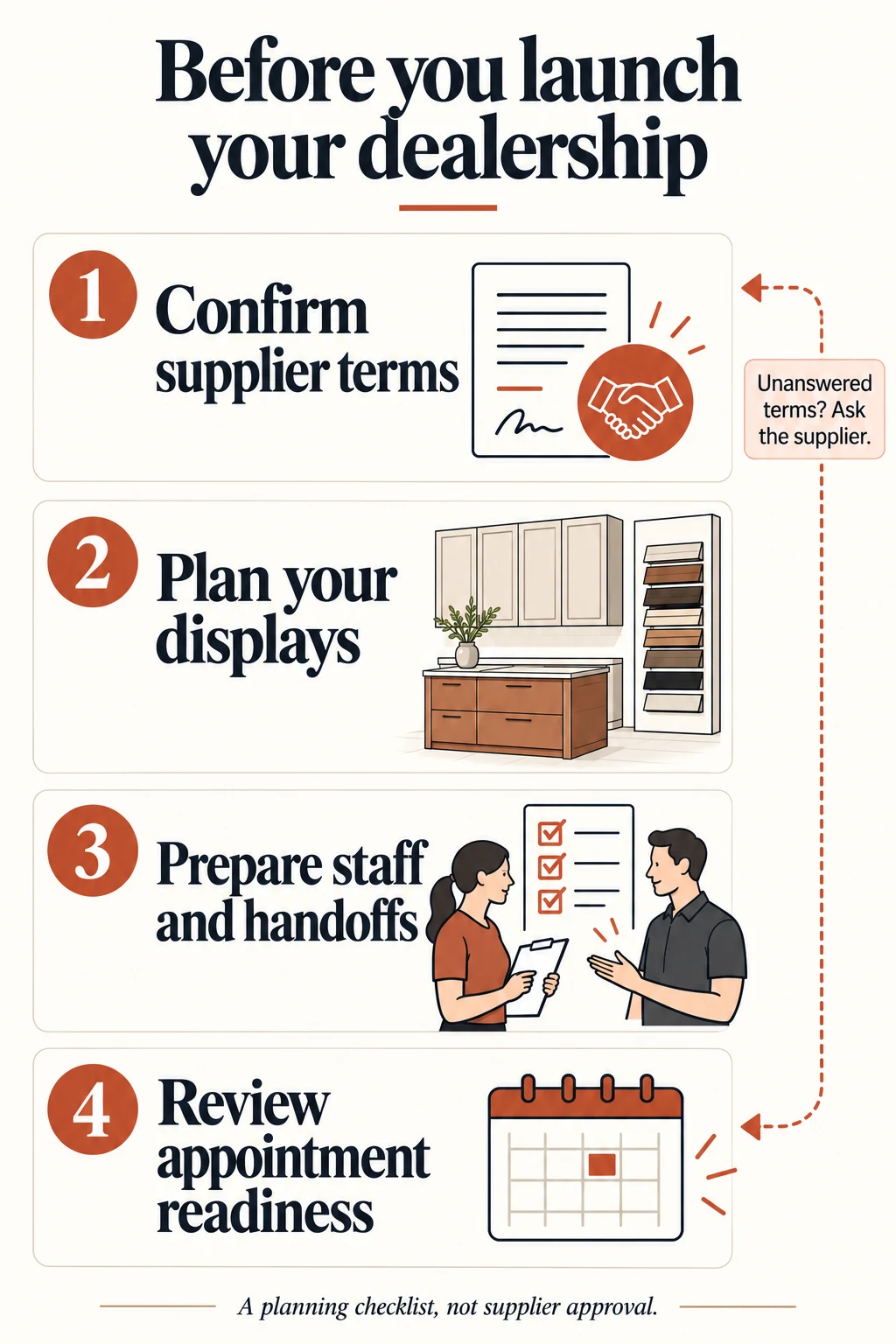
- Confirm supplier terms: ask for current written eligibility, territory, order, freight, warranty and exit terms.
- Plan displays: confirm the supplier’s display expectations and the products you can show.
- Prepare staff and handoffs: decide who handles design conversations, delivery questions and warranty responsibilities.
- Review appointment readiness: check that a homeowner can visit, see the lines and have a useful conversation before reviewing local marketing.
If an answer is missing, confirm it with the supplier and record the source and date. This checklist is a planning illustration, not a dealer approval or a universal supplier standard.
Use this blank dealer due-diligence worksheet to record answers, the source, the date checked, and any follow-up owner. It is a planning template, not a dataset or an endorsement of any supplier. For one current supplier example, Fabuwood describes a dealer program for showroom businesses and a separate Trade Partner route; confirm current eligibility and terms directly with Fabuwood before making decisions. That example does not establish a universal industry requirement.