
Marketing for cabinet franchise groups: one system every location actually runs.
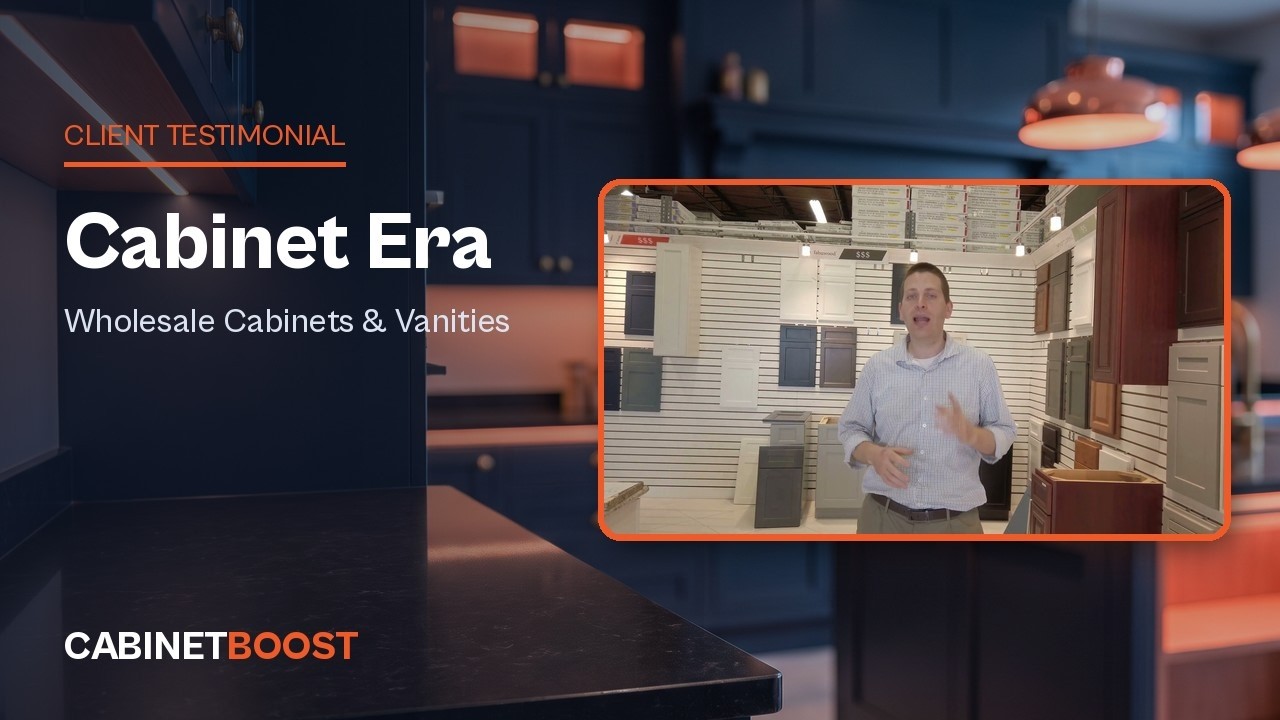
Named proof from a multi-unit cabinet group
Cabinet Era is a dealer group, not a franchise — named multi-unit proof (3 → 6 locations) using the same one-system mechanics.
- GBC Kitchen and Bath — a live cabinet-industry case. The numbers stay on that URL.
- NextDAY Cabinets — named only for #1 rankings. The full story stays on that page.
- Bienal Custom Closets — a live adjacent-trade case, not primary for franchise groups. The numbers stay on that URL.
From brand standards to adopted local demand
How a franchise system keeps one playbook while each unit runs its own market.
- Standards
Corporate sets the brand, offer and reporting standards.
Who acts Your team - Adopt
Franchisees launch their local pages and campaigns from the approved kit.
Who acts Both - Local demand
Each unit captures local searches and books its own appointments.
Who acts Both - Review
Corporate and franchisees read the same per-unit console.
Who acts Your team
Responsibilities split between corporate and franchisees; no outlet counts are implied.
The Franchise Playbook — what we do for groups like yours 6 steps
Every market runs the same proven playbook instead of improvising. Package what already converts, then roll it under one brand voice.
Google Business Profile discipline and review velocity for each unit, still readable as one brand across the network.
Local intent lands on local pages without two franchisees bidding each other into the ground.
Territory pages and local visibility for every operating location, congruent with the brand above it.
One console, rows by location, Friday-readable — spend, booked activity, and cost signals per unit.
Corporate and franchisee follow-up share a structure instead of a pile of spreadsheets.
Cabinet franchise groups need one system every location actually runs
CabinetBoost builds franchise groups one system scored on agreed per-location results, with one network per category per market and a weekly console that proves every row. See the cabinet marketing services behind it.
More about this program
This page is for marketing for cabinet franchise groups — corporate operators and unit owners who need territory-aware calendars, brand standards that hold, and one weekly view across every location. The product is one system plus brand voice plus per-location proof plus a group console, not a single kitchen package and not a stack of unrelated local vendors. CabinetBoost works with one franchise network per category per market.
What corporate and unit owners measure here is agreed per-location results: franchisee calendars that fill, console rows that prove it, brand standards that survive every market, and territory coverage you can actually read. Not a click dump. Not a blended group average that hides the weak unit. Not a one-off local campaign that drifts off-brand.
NKBA Member · KBIS 2026 Exhibitor · 7+ years in cabinet-industry marketing (CabinetBoost, 2026). Franchise groups typically start at $5,000-plus per month depending on location count; ad spend stays in your accounts. Picture every franchisee calendar filling under one brand voice, with a weekly group console corporate can read in a minute. By Sezgin Arslan, Founder · Updated Sep 14, 2026.
Picture every franchisee calendar filling under one brand voice.
Not a stack of local vendors. Not a blended average. Corporate and unit owners reading the same weekly console — rows by location — with brand standards that hold.
- Calendars fill Franchisee calendars that fill Local campaigns, pages, and review flows run inside brand rails so unit owners get demand in their territory without inventing a new agency every quarter.
- Console by unit Per-location truth in one weekly view The group console is rows of locations — spend, booked activity, and cost signals per unit — so corporate stops managing by blended average.
- Group results Agreed per-location results Franchisee calendars that fill and console rows that prove it under one system. Brand standards hold. Territory coverage stays readable.
Sound familiar? 3
One franchisee runs social from a phone. Another hired a cousin. A third still buys the local radio buy. Brand voice splinters, and corporate cannot tell which spend is working because nothing shares a structure.
National reports arrive as blended averages. A strong metro unit props up a quiet rural one. Co-op dollars get spent without a console row that shows whether that franchisee's calendar actually filled.
Your top store already knows which pages, offers, and follow-up sequences convert. That playbook never gets packaged, so the next openings reinvent it and the weakest unit never inherits what already worked.
What most franchise groups invest
Franchise groups typically start at $5,000-plus per month depending on location count (CabinetBoost, 2026). That is the CabinetBoost program fee. Ad spend is separate and stays in your accounts. Pricing steps down as locations are added. The first 90 days is a sprint; after that the engagement is month-to-month. The sanity check is agreed per-location results: whether franchisee calendars fill and console rows move under one brand. CabinetBoost will not invent an unattached ROI multiple on this page.
Why franchise marketing isn't single-store marketing
Retail single-store walk-ins and multi-brand display floors live on marketing for cabinet dealers.
Kitchen and bath design-floor sits live on marketing for kitchen & bath showrooms.
Warehouse, branch, and reorder programs live on marketing for cabinet wholesalers and distributors.
Plant, line, and builder-spec demand live on marketing for cabinet manufacturers.
Custom shop work lives on marketing for cabinet makers. In-home remodel estimate books live on marketing for kitchen & bath remodelers. Closet consult calendars live on marketing for custom closet companies. Fabricator measure calendars live on marketing for countertop stores and fabricators.
Multi-location cabinet businesses that are not a franchise network have a live border page at marketing for multi-location cabinet businesses — this page stays on franchise group governance.
Optional congruence: ERP integration. Unit-owner creative: Meta ads. Fast follow-up: AI chatbots. Campaigns go live after a fast kickoff. Rollout still runs in waves — pilot first — because franchisee buy-in is earned by console rows.
Who this isn't for
The guarantee only works when the fit is right — so we’re direct about who it’s not for.
If you run a single shop, the retail dealer and showroom programs fit better than a franchise-group console. This playbook assumes corporate plus unit owners across multiple markets.
If the ask is a PDF of approved hex codes and nothing that fills franchisee calendars, this is the wrong engagement. CabinetBoost builds the local demand layer under the brand, with per-location proof.
If franchisees can refuse the shared account structure, tracking, and console, corporate never gets readable group results. Buy-in is earned by a pilot — and the system only works when locations actually run it. We never gate photos or the strategy session on a public review.
Franchise group terms we use on this page 12
- Franchisee
- A unit owner operating under the brand in a defined territory.
- Unit owner
- The operator responsible for a location's calendar, staff, and local offers.
- Co-op
- Marketing dollars shared between corporate and franchisees under group rules.
- Brand standards
- Voice, creative rails, tracking, and reporting that stay centralized.
- Territory
- Geographic plus category coverage for a unit — and for exclusivity across the network.
- Pilot cohort
- The first wave of locations that prove the model before a wider rollout.
- Group console
- Weekly reporting where every row is a location corporate and unit owners can both read.
- Per-location page
- A market-specific page that stays on-brand while speaking to that territory.
- Account structure
- One campaign architecture with clean geographic splits so units do not bid against each other.
- Franchisee buy-in
- Unit owners who join because their own console row filled — not because a memo required it.
- Market exclusivity
- One franchise network per category per market, confirmed during onboarding.
- Agreed per-location results
- Franchisee calendars that fill and console rows that prove it under one system. The job language this page uses.
Questions owners ask before they call.
How does a franchise marketing rollout work across locations?
In waves. CabinetBoost starts with a pilot cohort — usually two to four locations, including your strongest — gets their campaigns, pages, and review flows live, and lets the console prove the model. What converted packages into the next wave. Every location that goes live gets its own campaigns, pages, review flow, and console row; a full group typically phases in over one to three quarters depending on size.
How is pricing structured for franchise groups?
Per location, stepping down as locations are added — a ten-location group does not pay ten times the single-shop rate. Whether the group runs corporate-funded, co-op, or franchisee-billed marketing, CabinetBoost fits the existing structure, and every location sees its own numbers. Exact scope is set on the strategy session. Most franchise groups start at $5,000-plus per month depending on location count; ad spend stays in your accounts.
How do you get franchisee buy-in?
By winning it. Franchisees who have been burned by corporate-blessed vendors get a pilot proven inside their own brand, their own per-location numbers on the console every week, and campaigns in their own market — not a blended group buy. When the pilot locations' rows fill up, the rest of the group asks to join.
Can franchisees keep some local control?
Yes — inside rails. Local offers, local photos, community sponsorships, and market-specific promotions stay with the franchisee. Brand voice, campaign structure, tracking, and reporting stay centralized so the group stays readable and the brand stays whole. The split is documented so nobody guesses.
What if some locations are in weaker markets?
The console shows it honestly instead of hiding it in a group average. Targets are set per market — a rural location and a metro location do not carry the same number — and budget shifts toward the markets that earn it. Weak-market locations get a market-level diagnosis, not a copy-paste of the metro playbook.
Does this replace what our corporate marketing team already does?
No — it runs the local demand layer under it. National brand campaigns, product launches, and creative standards stay with corporate. CabinetBoost runs what headquarters cannot: per-location campaigns, pages, reviews, and reporting in every local market, congruent with the brand above it.
How is franchise marketing different from marketing a single cabinet store?
A single store fills one showroom or dealer floor. A franchise group needs every unit on one system — brand standards, territory calendars, and a weekly console corporate and unit owners both trust. CabinetBoost builds the group engine, not a stack of unrelated local vendors.
How is franchise marketing different from distributor or manufacturer marketing?
Distributor marketing grows warehouse and branch reorder share. Manufacturer marketing builds demand for the plant and line. Franchise marketing fills franchisee calendars under one brand voice and gives corporate per-location truth. Each sit has its own playbook on CabinetBoost.
What's the ROI on marketing for a cabinet franchise group?
Measure ROI through agreed per-location results: franchisee calendars booked, console rows that move, franchisee buy-in across the pilot, and territory coverage under one brand. Cabinet Era's multi-unit growth from 3 to 6 locations provides named proof — not a counted offer. Your average ticket, close rate, and location count determine the value of those filled calendars.
Do you work with other franchise networks in my category and market?
CabinetBoost works with one franchise network per category per market and confirms geographic and category overlap during onboarding. That exclusivity protects the playbook and keeps campaign strategy aligned with territory coverage.
Agreed per-location results across every franchisee calendar
Start with the free audit: we review how each location runs demand today, then map one system your franchisees can run.