
A cabinet dealer can generate inquiries and still struggle to explain where the orders went. A form reaches one inbox, a showroom call reaches another salesperson, and a quote sits in a spreadsheet. Before buying more traffic, trace what happens after someone asks about cabinets.
Cabinet Era’s case study is useful because it connects demand generation with work on the sales floor. Its published results describe expansion from 3 to 6 locations across a four-plus-year partnership. Those are Cabinet Era’s outcomes. The operational lesson is how the business connected incoming leads to the people responsible for closing them.
Start with Nathan’s account of the sales problem
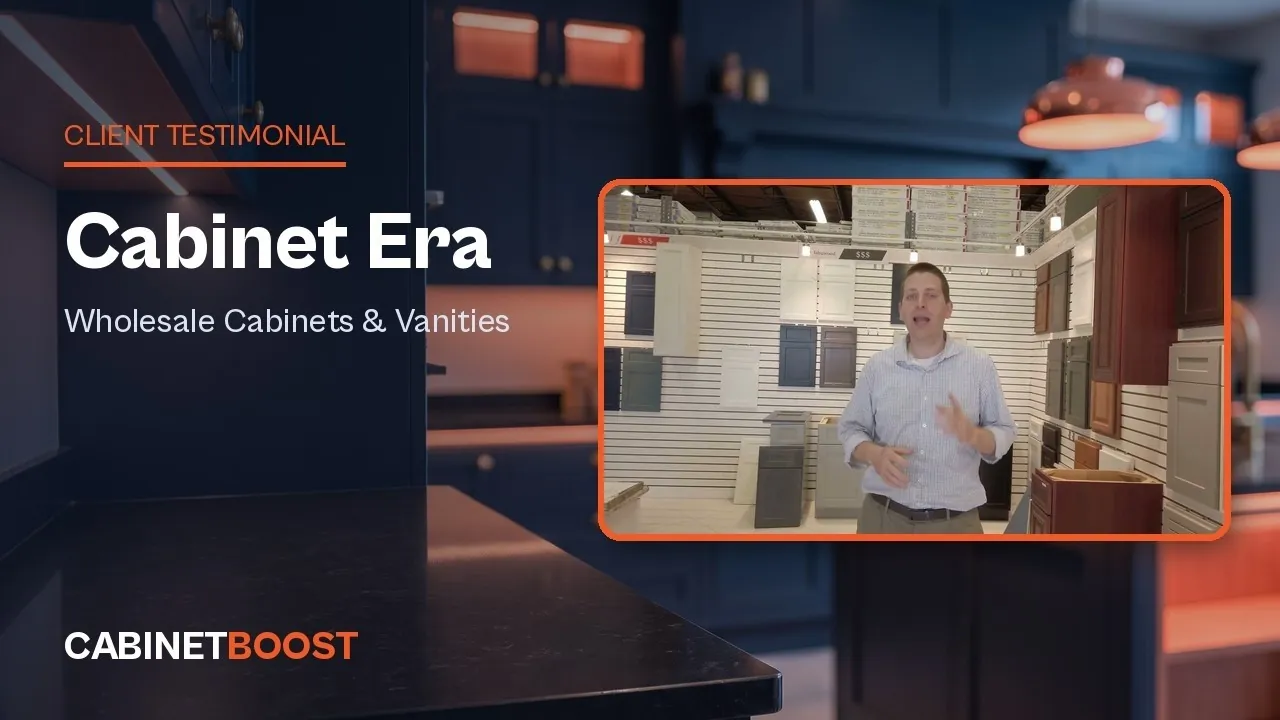
In the Cabinet Era testimonial, Nathan describes trying previous marketing companies, inconsistent follow-through and the burden of managing them. He then explains the app developed during the partnership:
“And in the end, we made an app together that helped us grow mutually, which will enable our sales team to see all the leads coming in and increase our closing rates, which increased our sales.”
That statement comes from the video transcript. It is Nathan’s account of the app’s value, rather than a controlled test of a single marketing change. He emphasizes something an owner can inspect: whether the sales team can see the leads coming in.
Visibility matters when several showrooms share a brand. A location can appear quiet because demand is weak, because inquiries were routed elsewhere, or because follow-up stopped. Those situations need different decisions.
What the published work involved
The case describes Google and Meta advertising, search visibility in each market, a shared inquiry system, a custom sales-floor app and the launch of Vita Cabinetry as a house brand. Its starting problems included uneven lead flow between showrooms, separate marketing approaches and manual quotes and follow-up.
Those changes span marketing and operations. Ads help reach buyers. Search helps them find the business. A shared system helps the team receive inquiries. The sales workflow determines who responds and what happens after the quote.
CRM setup and follow-up belongs in that conversation because a lead record should support a sale, not merely confirm that a form was submitted. Google Ads and local SEO serve different discovery needs, but both eventually depend on the handoff to your team.
The case’s location and warehouse expansion show the scale of the published story. They do not establish that an app or an ad campaign alone caused the expansion. Reviewing the work as a connected operation gives an owner a more useful starting point than copying the headline result.
Audit one inquiry from start to finish
Choose a recent inquiry that became an order and another that stalled. Ask the team to reconstruct each journey using records, rather than memory. This is a suggested owner checklist, not a description of Cabinet Era’s exact software configuration.
- Find the source. Was it a call, a website form, an ad, a referral or a showroom visit? Can the team recover that information later?
- Find the owner. Which salesperson accepted responsibility? If that person was unavailable, who covered the inquiry?
- Find the first conversation. Did the buyer receive a useful response about their project, or only an automated acknowledgment?
- Find the quote. Can another team member locate the cabinet selection, measurements, delivery needs and latest quote?
- Find the next action. Does the record say who will do what next? “Follow up” is less useful than an agreed call, appointment or requested document.
- Find the outcome. Record whether the buyer ordered, postponed, chose another supplier or stopped responding. Keep unknown outcomes visible.
If those answers require searching several personal inboxes, document the gaps before changing platforms. A clear workflow gives you something concrete to configure and train around.
Compare locations without hiding the gaps
Review inquiries, conversations, quotes and orders separately for each showroom. Use the same definitions so a quote at one location means the same thing at another. Keep unassigned inquiries and missing outcomes in the report.
Ask salespeople what blocked the next step. A buyer waiting for measurements needs a different response from someone who cannot get their requested cabinet line. Marketing reports become more useful when those reasons reach the person choosing the next campaign or page improvement.
For the paid-demand side of this discussion, read Bienal’s lead-cost and quality lesson. For other firsthand accounts of the work, use the client video guide.
Bring the handoff into your marketing review
Cabinet Era’s story gives you a concrete question: can every showroom see its inquiries and work them through to an outcome?
Book a CabinetBoost conversation and bring your current lead sources, sales workflow and one example of a stalled quote. We can examine where your marketing and follow-up connect, then identify which part needs attention first.