
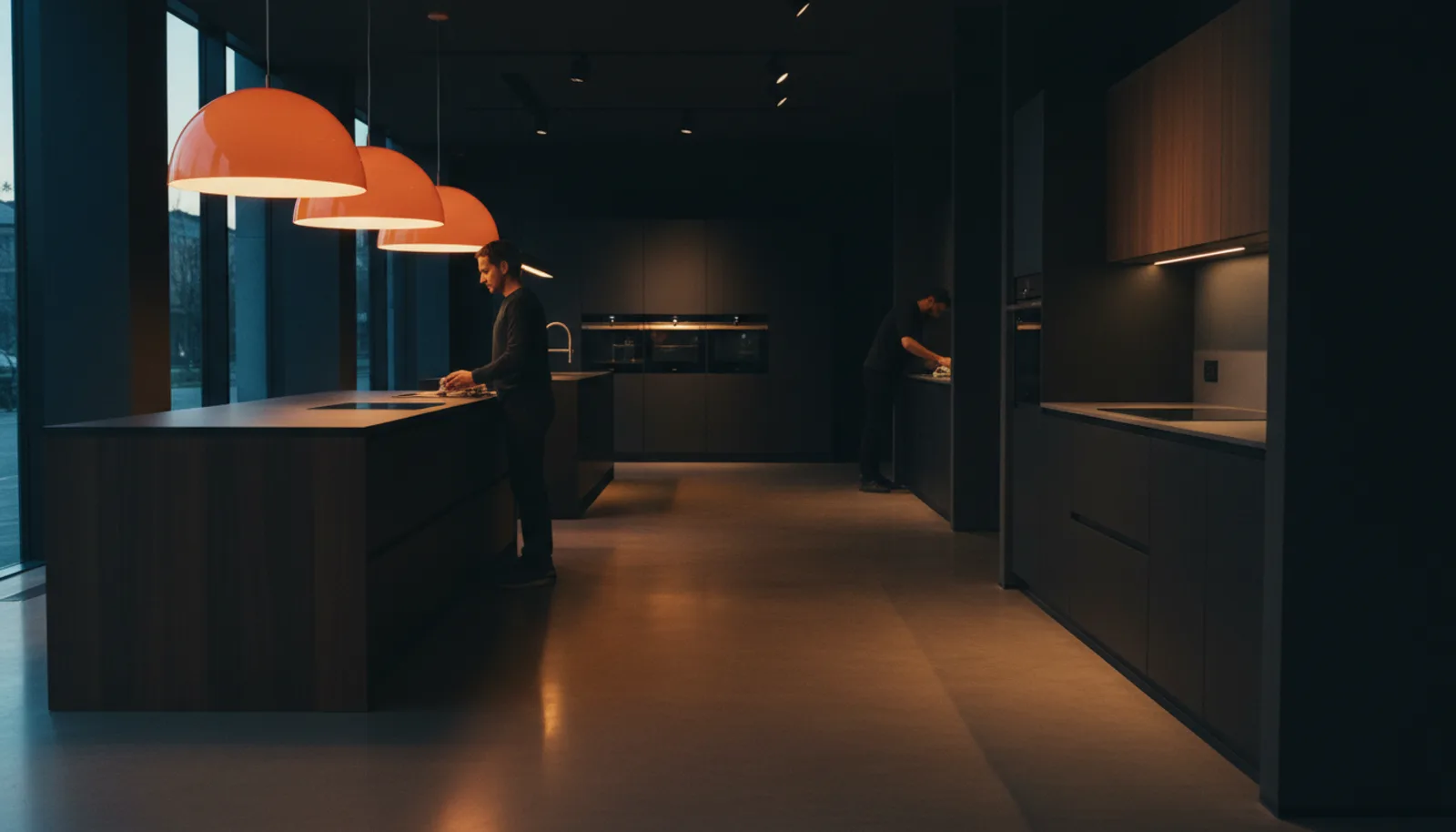
Market a kitchen showroom business by making the floor discoverable online and turning every serious visit into a booked showroom appointment — most cabinet businesses still budget about 7–8% of revenue for marketing. The commercial unit is not sidewalk foot traffic or a brochure download. It is a named buyer, a confirmed time, and a sit with a designer on the floor among lit vignettes. Industry fit starts with marketing for kitchen & bath showrooms.
You sell the floor appointment. The homeowner is the audience. That one sentence keeps kitchen showroom marketing out of coupon-gallery SERPs and inside commercial demand for operators who need a design calendar that fills. The National Kitchen & Bath Association frames kitchen and bath as a design-led trade with long research cycles; a showroom that markets like an emergency trade usually buys the wrong intent and wonders why map clicks never become sits. Channel execution after fit lands on SEO for cabinet businesses and Google Ads for cabinet businesses. Dual path in stays free cabinet audit and strategy booking. Named proof stays on allow-list cases such as GBC Kitchen and Bath, Cabinet Era, Bienal Custom Closets, and NextDAY Cabinets — never anonymous ROI stacks.
The rest of this guide keeps the live spine — own local search, turn the website into an appointment machine, convert visits, nurture past guests, then layer paid — deepened toward appointments you can audit. Foot traffic vanity and brochure downloads are activity; a named buyer who sits with a designer on the floor is the commercial proof showroom operators should demand from every channel. Operators who already own lit vignettes and a designer desk still lose if discovery, the website ask, floor process, nurture, and paid amplification are not scored as booked showroom appointments. Win the markets you actually serve with Google Business Profile relevance — not thin geo clones.
Own the Local Search
Most serious showroom visits start on a phone — a complete Google Business Profile, steady reviews, and service-area relevance make the floor findable for “kitchen cabinets near me” without farming a thin city page for every ZIP.
A homeowner types a near-me cabinet or kitchen showroom query and chooses from the map results. If the Google Business Profile is incomplete, you are invisible in that moment. Fill every field, upload display photos of cabinet vignettes weekly, ask for reviews after installs, and post short updates when a new finish lands. Reviews after a sat floor appointment beat stars collected for vanity. Service-area relevance and honest NAP consistency matter; empty “custom cabinets in [city]” clones do not.
Local search engine optimization is a visibility system, not a reason to mint ZIP spam. For deeper owned-visibility principles with store examples, see local SEO for cabinet stores once — then return here for the showroom appointment spine. Score booked showroom appointments from organic and map demand, not pack screenshots alone.
Make the Website an Appointment Machine
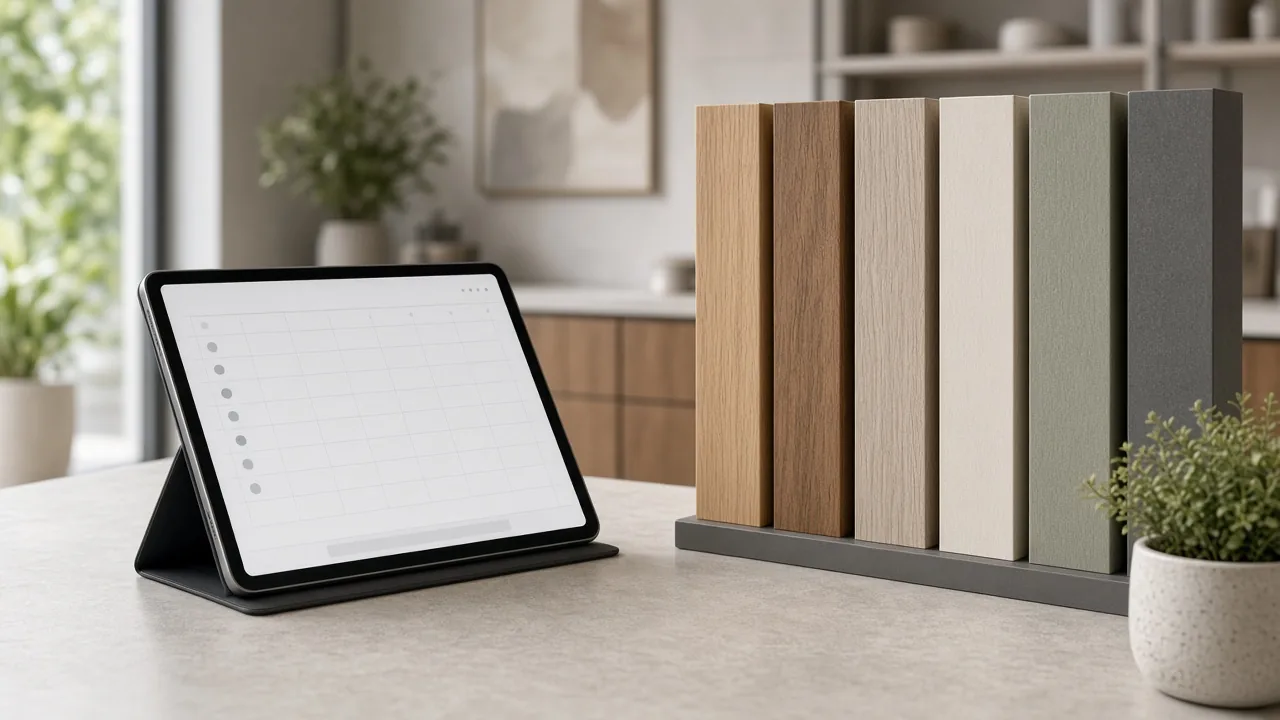
A kitchen showroom website is not a digital brochure — it must show real cabinet displays and finished kitchens, list brands and design services, surface readable reviews, and make booking a showroom appointment the primary call to action.
Keep the booking form short: name, phone, email, project type, and preferred appointment window, plus click-to-call. Every extra field lowers completion and empties the design calendar. Industry benchmarks commonly report that many contractor websites convert only about 2–3% of visitors into a form, so a clear Kitchen Showroom value proposition and a single primary ask beat fancy chrome. Landing pages that could run for an unrelated trade unchanged are not showroom work. After the Showrooms hub confirms industry fit, deepen entity clarity with SEO for cabinet businesses — owned pages that sell the floor sit, not a PDF lookbook for Cabinet Era–style ticket sizes.
Photograph what buyers walk: lit vignettes, door libraries, installed kitchens, and the Designer Desk where the sit happens. Soft CTAs without a book-a-visit path train tire-kickers; hard CTAs that sell the floor appointment train the calendar. Mobile proof matters because Google Business Profile shoppers often open the site from a phone before they ever cross the threshold.
Convert Showroom Visits Into Sales
A full kitchen showroom with no appointment system is a missed opportunity — train staff to book the next step before the visitor leaves, and score winners on appointment-to-sale process, not square footage alone.
Offer a free design consultation on the floor, a measured site visit, or a rendered layout — whatever your process uses as the honest next commercial step. Capture name, phone, and preferred window before they return to the parking lot. No-shows and source attribution belong on the same sheet as sat sits. The conversion noun stays a showroom appointment: named buyer, confirmed time, sits with a designer on the floor. Remodeler in-home consultations are a different commercial unit; keep that hire language on marketing for kitchen and bath remodelers.
Walk-ins remain a bonus on any given Saturday. The system is the booked sit you can audit. If the kitchen showroom floor looks busy but the design calendar stays empty, marketing is not the only gap — process is. Staff scripts should end with a confirmed showroom appointment or a clear decline reason.
Nurture Past Visitors
Most people who visit a kitchen showroom are not ready to buy the same day — a simple nurture sequence with design tips, new arrivals, and seasonal offers converts past guests cheaper than cold demand because they already trusted the displays once.
Add them to email or SMS with permission, then stay useful through a research cycle measured in weeks and months, not same-day emergency urgency. A nurtured past visitor already saw the vignettes; reopen the appointment ask when finishes, lead times, or budget clarity move. Track which sequences create second sits versus vanity opens. Cheap opens without calendar motion fail the commercial test the same way brochure downloads do.
Owned follow-up compounds. Shared-lead CSVs reset every month you stop paying for names. Segment past kitchen showroom visitors by project type so a semi-custom refresh does not get the same nurture as a full custom kitchen package. Prefer sequences that reopen a second floor sit over vanity open rates. When demand must become sits you keep, read how to get cabinet showroom leads once — then keep this URL on the full marketing system for the floor.
Layer Paid Channels After the Foundation
Once the organic foundation is solid, add Google Search and Local Services Ads for active buyers, then use Meta for inspiration and retargeting — and still score every dollar as booked showroom appointments, not vanity CPL.
Google Ads and Local Services Ads capture people already shopping cabinet and kitchen showroom intent. Paid social without a trust layer — complete Google Business Profile, reviews, and a site that books sits — usually wastes budget. According to the Small Business Administration, 7–8% of gross revenue remains a familiar marketing guideline when margins allow (CommonMind, 2024). A kitchen showroom doing about $1M should plan roughly $5,800–$6,700 per month across channels as a working band, not a published CabinetBoost SKU. Route managed paid hire through Google Ads for cabinet businesses after the showrooms hub.

A 90-day sequencing checklist
This is a sequencing order, not a promised timeline — move to paid only after the organic foundation is measurable.
| Phase | Focus | Appointment metric to watch |
|---|---|---|
| Days 1–30 | Complete GBP, service-area relevance, review asks after installs | Booked sits from map and organic |
| Days 31–60 | Website sells the floor appointment; short form plus click-to-call | Form-to-booked rate |
| Days 61–90 | Staff book the next step on the floor; launch nurture for past visitors | Appointment-to-sale and second sits |
| After the foundation | Layer Google Search, Local Services Ads, then Meta retargeting | Cost per booked showroom appointment |
When should a kitchen showroom hire a marketing partner?
Hire when the design calendar stays empty, GBP is thin, and nobody owns appointment follow-up — then start from marketing for kitchen & bath showrooms for industry fit, with SEO or Google Ads as execution and free audit plus booking as the dual CTA.
DIY works when the Google Business Profile is complete, the site already sells the floor appointment, staff books the next step before guests leave, and nurture reopens sits. Hire when search demand is real but the calendar does not move; when rented leads eat margin; or when you want an operator who speaks showroom-appointment language. When you’re ready to hire, marketing for kitchen & bath showrooms books 20 showroom appointments in 90 days or you don’t pay. Channel work still matters after fit — SEO and Google Ads for cabinet businesses — but this article stays the how-to spoke.
Named proof to trust: GBC Kitchen and Bath for the prior-agency failure mode (see the live GBC Kitchen case study), Cabinet Era and Bienal Custom Closets by name, and NextDAY Cabinets’ #1 rankings when organic color is needed. Refuse anonymous client-count theater. Founder Sezgin Arslan has 7+ years in cabinet-industry marketing. Confirm market exclusivity and appointment reporting on the call.